
McLeod Multi-Day Arrest Sources
Start with a label problem. "Arrest Reports" names a menu, not one database. The McLeod County Sheriff's Office runs a live custody table. It drops people from the list as custody changes. Its Reports and News document center holds monthly Total Incident Summary by Incident Type reports. Annual reports sit there as well. Those papers count incidents by category for a set period. They never rebuild the roster's person-level rows, booking numbers, or photos.
Local papers fill part of the gap. The Hutchinson Tribune prints a weekly police blotter. Herald Journal weekly records pull from the Sheriff plus the Hutchinson, Glencoe, and Winsted police. Winsted Lester Prairie Police Department posts monthly activity links too. None of these is a complete county booking history.
| Source | Window and use |
|---|---|
| Live county roster | Current custody at its generated time |
| Sheriff incident summaries | Monthly aggregate incident types |
| Hutchinson Tribune | Weekly city police narrative |
| Herald Journal | Weekly local public-record material |
| WLP Police activities | Monthly department activity reports |
| Agency request | Defined older arrest or incident record |
Read McLeod Police Blotters
A blotter entry squeezes an event into a few lines. It names the agency, the date, and maybe an arrest, transport, or citation. It rarely carries every field the jail roster shows. Check the publisher and date first. Then treat the reported event as separate from later custody and court outcomes.
- Choose the agency and date range connected to the incident.
- Open the original publisher or official report, not a search snippet.
- Record the issue date, incident date, place, and agency report number if supplied.
- Check the official county roster only for present McLeod jail custody.
- Use the originating police agency or Sheriff records custodian for the full public report.
- Follow a filed case through Minnesota Court Records Online or McLeod District Court.
The last step matters most. A blotter only says what police reported that day. Prosecutors may amend or drop counts later, and the court disposition is the final word.
McLeod Arrest-Log Fields
No standard McLeod arrest-log format exists. A person-level entry may carry some fields and lack the rest. Monthly incident-summary PDFs list only a category and a count, never every row.
| Possible field | Meaning or limit |
|---|---|
| Date range | Period covered by the issue, not always exact event time |
| Agency | Police or Sheriff source of the reported event |
| Incident | Short account or category, sometimes without a named person |
| Arrest or citation | Action reported then, not a conviction |
| Transport | May state McLeod Jail, but does not prove current custody |
| Charge description | Initial charge subject to court change |
| Report number | Best key for a targeted agency request when present |
Booking photos, MNI numbers, bail and bond amounts, and booking numbers live on the county's live roster when it publishes them. A weekly paper is no authority for those fields. The monthly incident summary tracks patterns. It will not tell you who was arrested.
Weekly McLeod Arrest Coverage
The Hutchinson Tribune blotter archive posts the clearest recurring local text. Entries sit under weekly date ranges. Most come from Hutchinson Police Services. The index stays online after the roster drops someone. That makes it useful for tracing a past arrest. The weekly blotter index itself shows the layout, though the paper publishes independently and may never add later corrections or court results.
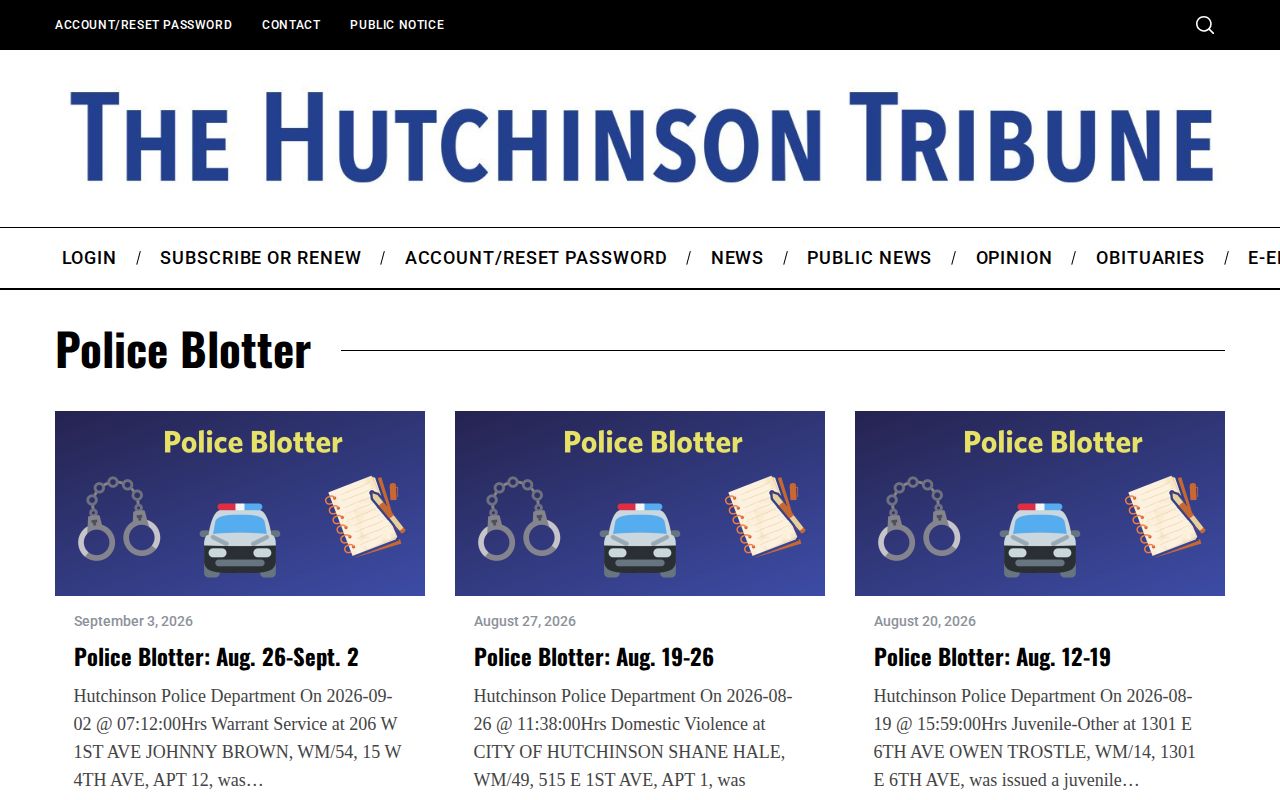
Date-range grouping suits multi-day discovery. It cannot answer a same-day custody question. Herald Journal weekly public-record pages add regional context from several agencies. One cited issue carried police and Sheriff text plus a transport to McLeod Jail. It was no mugshot gallery and no county database. Save the issue and date. The named office can confirm the details.
Note: A news lead can point to an official record, but publisher text alone cannot confirm current custody.
McLeod Incident Report Archive
McLeod's official document center reaches back several years, with folders and reports from 2017 onward. That depth gives the county a real archive. The format is the catch. Monthly reports summarize incident types rather than each booking row. They show whether categories rose or fell across reporting periods, but not whether one named person was booked on a date. You browse them in the Sheriff document center.
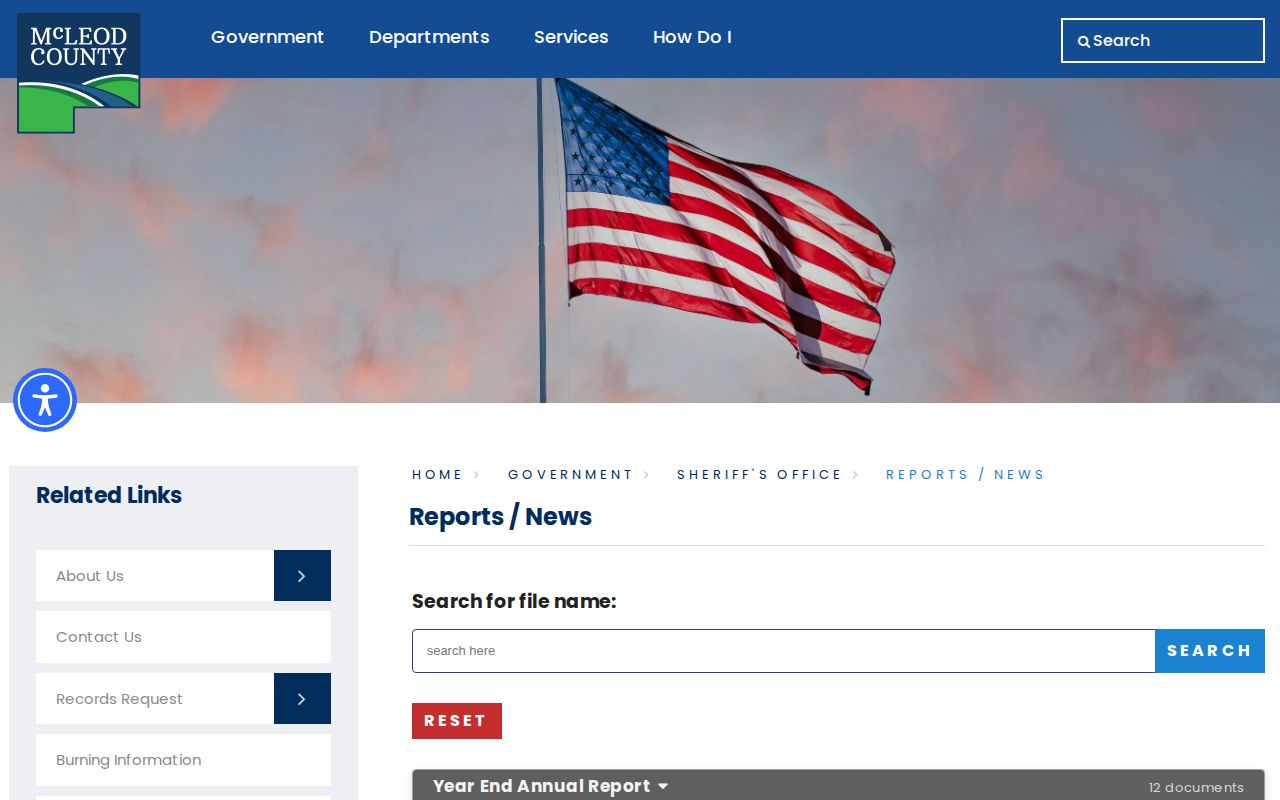
The folder layout suits trend research. It also confirms these are not person-level arrest reports. An incident count is not a headcount of unique people arrested, since one event can span several categories and not every incident ends in a booking. Use the summaries for context only.
Older McLeod Arrest Records
Older arrests take legwork. The county publishes no historical booking-photo archive, no booking-history download, and no stated roster-retention period. Start by defining what you want. Name the person, the approximate date, the agency, the location, and the exact record type. Then go to the right custodian. The Sheriff handles county bookings and Sheriff incident records. City police handle reports their own officers wrote. If the date is fuzzy, ask the custodian to name the record series. Minnesota's county law-enforcement retention schedule is a lead, not a promise, with differing periods for admission and release records, local identification files, and adult case files. Local adoption, later updates, redaction rules, and record status all affect what survives. The Minnesota State Archives government-records page lays out the broader framework.
That same government records archive page marks the historical route for a deeper search.
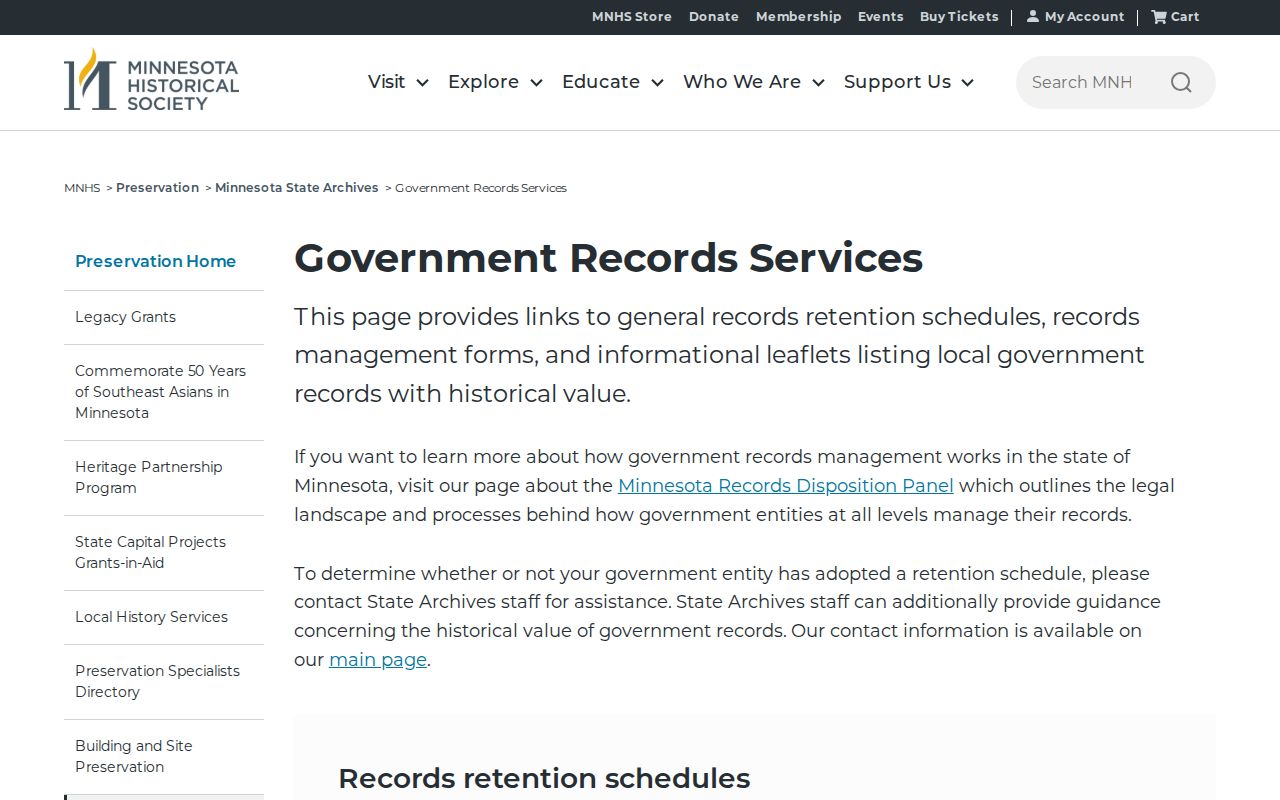
It flags preservation help, not a guaranteed booking record.
Verify McLeod Arrest Reports
Start with the source that answers your actual question. The live roster covers current county custody. A Sheriff or city incident report gives the arresting agency's own account. Filed charges live in the court file. Minnesota DOC handles adults committed to the Commissioner. State jurisdiction is not the same as a fresh McLeod County booking. Third-party mirrors can look official yet sit stale, duplicated, or incomplete. Go to official sources first. No image from a mirror proves current custody. Only the government office can correct the original record.
For just the current roster and its timing caveats, use the Arrested Today view. That page is separate from the multi-day archive paths here.
Request McLeod Arrest Reports
A precise request works best. Weekly articles run thin, and rosters change fast. The McLeod County Sheriff's records page takes submissions online, by mail, or by drop-off. Name the person. Add the approximate date, the place, and the originating agency. Say exactly what you want, whether that is the arrest report, a booking photograph, or an admission, release, or booking record. A narrow ask beats a demand for everything. The Sheriff's records office sits at 801 10th Street East, Glencoe, MN 55336, and takes email at McLeod.SheriffRecords@co.mcleod.mn.us. Court administration sits at 830 11th Street East. Don't send a booking-photo request there just because both offices share Glencoe; the court holds case files while the jail and arresting agency hold the original police and booking records.
- Identify the agency behind the first reference.
- Preserve its date range and any report number.
- Name the precise record and desired inspection or copy format.
- Send it to the Sheriff or city custodian that created it.
- Ask for the basis of any redaction or withheld portion.
- Check the court separately for final disposition.
Historical McLeod News Records
Old newspaper coverage often reaches further back than today's web indexes. Print archives hold long runs. The Minnesota Historical Society tracks McLeod County Chronicle holdings. Local libraries and paid archives may carry older Hutchinson Leader, Herald Journal, and related coverage too. Search by a narrow date. Add the city, the agency, and the event. A common name alone pulls too many false matches. The McLeod County Chronicle archive route is listed on the society's newspapers hub.
Newsprint stays secondary. The agency record and the court result still settle the timeline. Keep the publication date from any clipping. Then track down the official source the story names. When no court case was ever filed, the arresting agency may hold the only public arrest data. When a case exists, the court record closes the loop. Archive access varies by issue and provider. A gap online does not mean nothing ran in print, so ask a library or publisher about the exact issue, then verify the event with the responsible agency.
Search Public Records
Sponsored Results